
foam concrete lifting vs slab replacement: smart repair choices for 2026
Most basic advice about “foam concrete lifting vs slab replacement” boils down to vague cost comparisons or generalities. If you’ve already tried patching cracks or adding fill dirt with no lasting results, you’re in the right place. This article cuts through generic tips to give you clear, actionable guidance on when foam lifting works, when replacement is unavoidable, and what to expect from each repair method in 2026.
We’ll break down each method visually, explain the step-by-step process of foam lifting, and provide real-world cost and durability comparisons. Plus, I’ll share insights from testing polyurethane foam repairs on slabs that were 15-25 years old — including what I did when a lift didn’t settle properly the first time.
How Foam Concrete Lifting Actually Works (and Where It Falls Short)
Foam concrete lifting, also called polyjacking, pumps expanding polyurethane foam beneath a sunken slab to raise and level it. The key here is the lightweight foam — it fills voids and stabilizes soil without adding heavy load. Notice how the foam’s expanding nature gently pushes the slab upward without cracking it further. This makes it a go-to for slabs with minor sinking or unevenness.
However, foam lifting isn’t a fix-all. If the slab is cracked beyond about 1/8 inch width, warped, or the soil below is eroding continuously, foam can only do so much. It won’t replace broken slab sections or fix serious drainage problems causing soil washout. In those cases, slab replacement is the only way to regain long-term stability.
| Foam Lifting | Limitations |
|---|---|
| Raises slabs up to 4-6 inches | Not for slabs with large cracks or breaks |
| Lightweight, minimizes added soil pressure | Ineffective if soil erosion continues underneath |
| Quick cure time (minutes to hours) | Cannot fix warped slabs or extensive damage |
If you want to understand how foam compares to other lifting methods, the article on polyurethane foam vs cement slurry concrete lifting dives into details you’ll appreciate.
Step-by-Step Foam Lifting Process You Can Watch For
- Inspect and map the slab. Check for cracks wider than 1/8 inch, surface damage, and measure the unevenness. Do not proceed if slab pieces are loose or broken apart.
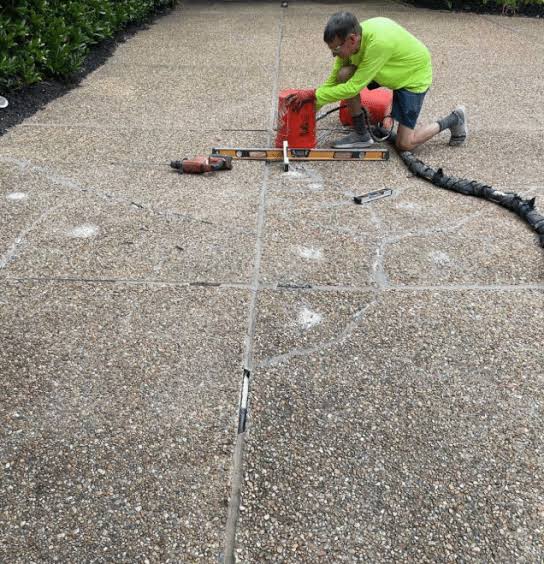
- Drill 1-2 inch holes in strategic spots. These allow the foam to be injected beneath the slab. Avoid drilling too close to edges or large cracks to prevent further damage.
- Inject polyurethane foam mixture. The foam expands rapidly, filling the voids and lifting the slab gently. Watch the slab rise slowly — sudden jumps mean uneven pressure.
- Monitor slab level closely. Use a laser level or straight edge to measure progress every 15-30 seconds. Stop injection when the slab is within 1/8 inch of level.
- Fill drilled holes with quick-set concrete. This seals the slab surface and restores the slab’s original appearance and strength.
- Final inspection and cleanup. Confirm slab is stable and level after foam cures (often within 15 minutes). Move furniture or resume use after a few hours.
What NOT to do: Don’t rush the injection or overinflate foam — it risks cracking the slab or creating uneven lifts. Also, never ignore underlying soil conditions that caused sinking.
When Slab Replacement Becomes the Only Solution
Slab replacement involves removing the entire concrete slab and pouring a new one. It’s the right choice when:
- The slab has multiple cracks wider than 1/4 inch or is shattered.
- The slab is warped or severely bowed.
- Underlying soil instability or drainage issues are ongoing and can’t be fixed by lifting.
- Previous lifts (foam or mudjacking) failed repeatedly.
This option is more expensive and disruptive but necessary for long-term stability when the slab is beyond repair. Replacement also lets you correct drainage or soil compaction problems before new concrete is poured.
Here’s a table comparing key slab characteristics to decide between lifting and replacement:
| Slab Condition | Recommended Fix | Why |
|---|---|---|
| Minor sinking, small cracks <1/8 inch | Foam Concrete Lifting | Stabilizes soil, minimal slab damage |
| Cracks >1/4 inch, slab warped or broken | Slab Replacement | Restores structural integrity, solves soil issues |
| Repeated sinking after leveling | Slab Replacement | Underlying soil instability requires full fix |
For deeper insights on when replacement is necessary, see the article on when is concrete too damaged to lift.
Comparing Costs and Downtime in 2026
In 2026, material and labor costs have shifted slightly, but the cost gap between foam lifting and slab replacement remains significant. Foam lifting typically costs between $3.50 and $6 per square foot, including materials and labor. Slab replacement can run $8-$15 per square foot due to demolition, disposal, and new concrete pouring.
Downtime also varies sharply. Foam lifting cures within hours, meaning walkable surfaces the same day and full use in 1-2 days. Replacement slabs require 3-7 days curing before light use, and a full 28 days for full strength.
2026 Cost and Downtime Comparison
| Repair Method | Average Cost (per sq.ft.) | Downtime Before Use | Typical Warranty |
|---|---|---|---|
| Foam Concrete Lifting | $3.50–$6.00 | 2–4 hours | 10+ years |
| Slab Replacement | $8.00–$15.00 | 3–7 days | 15–20 years |
Foam lifting is clearly the cheapest way to fix sunken slab problems with minimal interruption. Slab replacement shines when you need a long-term solution for severely damaged concrete or unstable soil.
Why Leveling Is Often Preferred Over Tear-Out
Concrete raising (leveling) with foam or mudjacking often beats tear-out replacement because it:
- Costs less than half the price in many cases
- Preserves existing slab integrity and appearance
- Finishes with minimal disruption to landscaping and property
- Is faster, allowing same-day or next-day use
The key is proper soil evaluation before lifting. If you skip this, the slab may sink again, causing the lifted slab to be uneven.
Note: Foam lifting has become the preferred leveling method in 2026 due to its lighter weight and faster cure time compared to traditional mudjacking. For more on this, see polyjacking vs mudjacking.
Common Mistakes That Keep Slabs Uneven After Lifting
One frustrating issue is lifted slabs still showing unevenness days or weeks later. Here’s what often goes wrong:
- Under-injection of foam: Not enough foam is pumped to fill the void completely. The slab then settles back.
- Ignoring soil conditions: If soil is still eroding or compacting, the slab will sink again after lifting.
- Poor hole placement: Holes drilled too far apart or near edges can cause uneven lifts or slab cracking.
- Rushing the process: Injecting foam too fast can cause uneven pressure and slab cracking.
- Faulty leveling tools: Not checking slab elevation carefully allows small unevenness to persist unnoticed.
Pro Tip: After foam injection, always re-check slab level with a laser level and be prepared to inject additional foam within 24 hours if minor settling occurs.
Before vs. After: Real Examples of Foam Lifting and Replacement
Seeing is believing. Here are two examples that highlight the difference.
Example 1: 20-year-old driveway slab with minor sinking and small cracks. Foam lifting raised it 3.5 inches in under an hour. The slab was within 0.1 inch of level, and the small cracks remained stable. The driveway was in use the same day, no heavy machinery needed.
Example 2: 35-year-old patio with multiple cracks over 1/4 inch and warped sections. Replacement was chosen. The old slab was removed, soil re-compacted, drainage improved, and a new slab poured. The patio was inaccessible for 5 days but has since remained perfectly level.
These examples show why “lift or replace concrete slab” decisions must factor slab age, damage, and soil conditions — not just cost.
For more about deciding when to repair or replace sunken concrete, check out the detailed guide at repair or replace sunken concrete.
Common Questions About foam concrete lifting vs slab replacement
What is the difference between lifting and replacing a concrete slab?
Lifting raises an existing slab back to level by injecting foam underneath, preserving most of the original concrete. Replacement removes and pours a new slab, necessary when the slab is cracked, broken, or warped beyond repair.
How to decide between foam lifting and replacement step by step?
Step 1: Inspect cracks—if wider than 1/8 inch, consider replacement. Step 2: Check soil stability; unstable soil means replacement. Step 3: Assess slab age and damage. Step 4: For minor sinking and stable soil, choose foam lifting for a cost-effective fix.
Foam lifting vs slab replacement — which is better for a 30-year-old patio?
If the patio’s concrete is mostly intact with minor cracks and sinking, foam lifting is usually better due to lower cost and fast cure. But if it has extensive cracking or warping common in 30-year-old patios, slab replacement is safer for durability.
Why is my lifted slab still uneven and how to fix it?
Unevenness after lifting often results from under-injection of foam or ongoing soil erosion. Fix this by scheduling a follow-up foam injection within 24 hours, and address drainage or soil compaction problems to prevent future sinking.
How much cheaper is foam lifting than slab replacement in 2026?
Foam lifting costs about 50-60% less per square foot than slab replacement in 2026, averaging $3.50–$6 versus $8–$15. Plus, it requires less downtime and disruption.
The Bottom Line
Foam concrete lifting offers a highly effective, quick, and affordable way to fix sunken concrete slabs for most homeowners in 2026. Its minimally invasive process preserves your slab and reduces downtime. But if your concrete is cracked heavily or warped, slab replacement remains the only durable fix.
Pick one step from the foam lifting process—like careful slab inspection and crack measurement—and try it this week. Understanding your slab’s condition sharply narrows your choices and leads to smarter repair decisions.
For a deeper comparison of concrete lifting methods and the latest in 2026 repairs, see Polyjacking vs Mudjacking: Which Concrete Lifting Method Wins for Your Slab (2026 Comparison).
See also: polyjacking vs mudjacking
See also: polyurethane foam vs cement slurry concrete liftin
See also: repair or replace sunken concrete

Leave a Reply